.png)
More than half of skilled nursing facilities rely on agency support, and nearly half limit admissions due to labor shortages.
In this environment, the goal is not to eliminate agency. It is to understand it and manage it strategically. Operators who effectively manage agencies track clear, consistent metrics that quantify usage, cost, and downstream impact.
Below are five agency-focused metrics every skilled nursing organization should monitor.
1. Agency usage rate
The first step in managing agency staffing is visibility.
In Covr, agency usage rate is tracked by:
- Shift Date
- Name
- Shift
- Agency
- License
- Scheduled Hours
- Worked Hours
- Total Scheduled Hours
- Total Worked Hours
This level of detail reveals whether agency reliance is structural or situational.
For example:
- Are certain buildings consistently dependent on agency?
- Do weekend or night shifts drive more usage?
- Is agency use increasing as census rises?
Without this breakdown, agency can quietly become the default staffing solution. With it, leaders can distinguish between short-term coverage gaps and long-term workforce challenges.
2. Agency cost and vendor performance
Side-by-side vendor analysis strengthens purchasing leverage and improves accountability. It also increases transparency in shift-level decision-making.
If one agency consistently fills shifts at lower cost with fewer cancellations, schedulers can prioritize that vendor, and administrators can use that data to negotiate better rates.
At a minimum, operators should track:
- Bill rates
- Fill rates
- Cancellation rates
- No-shows
- Credential compliance
- Clinical performance feedback
3. Staffing efficiency ratio
Eliminating agency at all costs is a common sentiment in long-term care. But agency decisions should be evaluated against revenue impact, not just hourly rates.
We know CMS ratings impact revenue. An analysis of operating margins at two-thirds of Medicare-certified nursing facilities found a direct correlation between higher ratings and higher operating margins.
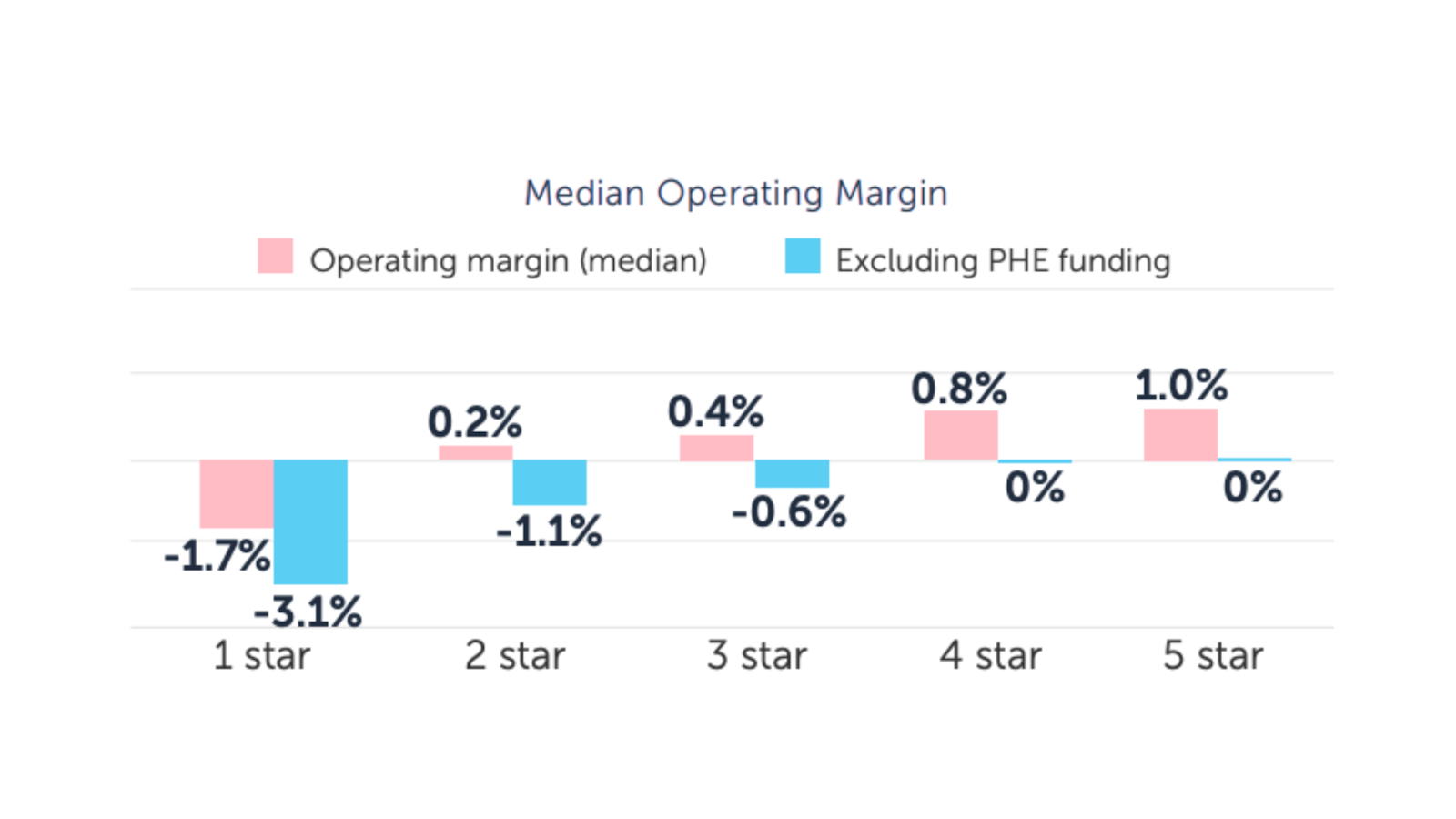
There are multiple reasons behind this correlation. One is the occupancy rate. Facilities with higher star ratings have higher occupancy rates.
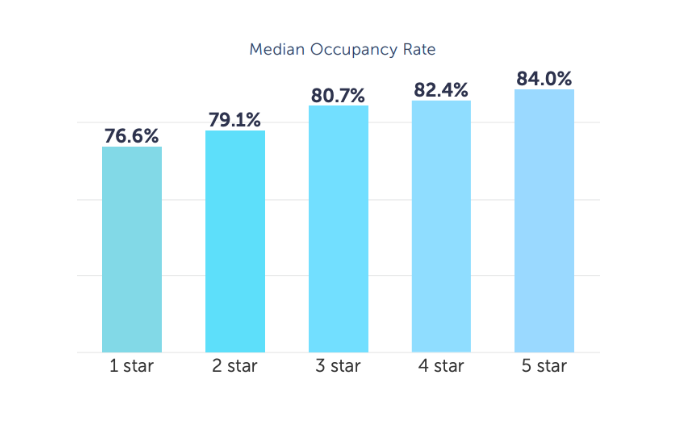
So where does agency fit?
Higher-rated facilities are relying less on agency staffing, which cuts costs and improves margins, but they haven't eliminated using agency entirely. Higher-rated facilities tend to balance adequate PPD levels with controlled agency spending.
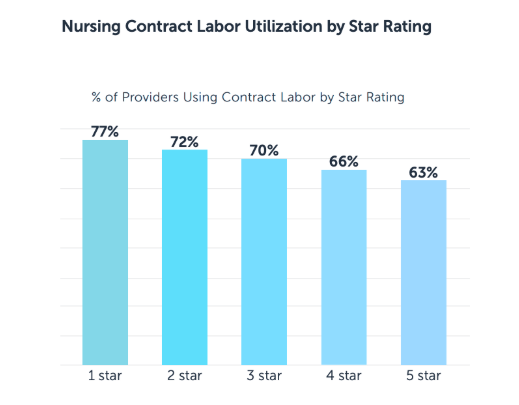
If losing admissions due to lower ratings caused by short staffing results in a significant loss of margin, agency coverage may be financially justified. Conversely, if agency cost outweighs potential revenue, the shift may not make economic sense.
Staffing Efficiency Ratio = Revenue Loss Avoided ÷ Agency Costs
To calculate this ratio, estimate:
- Expected reimbursement for an admission
- Average length of stay
- Contribution margin
This metric reframes agency decisions as financial evaluations rather than emotional reactions.
4. Cost-to-hire ratio
Many administrators assume agency staff is always more expensive. While that’s generally true when comparing hourly rates, there are other costs associated with hiring and retaining internal employees that must be taken into account. Recruitment, onboarding, benefits, and retention costs can push the fully loaded cost of an internal hire above agency spend.

Cost-to-Hire Ratio = Total Cost of Full-Time Employee ÷ Agency Costs
When recurring agency spend exceeds the fully loaded cost of a permanent employee, hiring may be the more sustainable option. When agency use is intermittent or seasonal, maintaining flexibility may be appropriate.
5. Shift stability ratio
Agency decisions also affect internal staff stability.
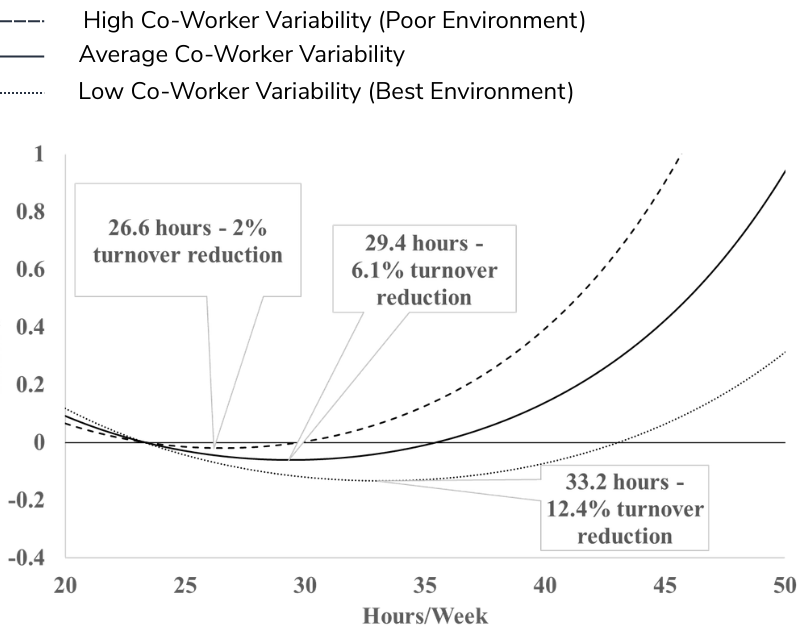
Research from the University of Washington shows two factors strongly influence CNA turnover:
- Weekly hours worked
- Co-worker variability (how often staff work with unfamiliar teammates)
Even in strong work environments, turnover increases when CNAs regularly exceed 43 hours per week.
Shift Stability Ratio = Employee Turnover Costs ÷ Agency Costs
If avoiding agency leads to sustained overtime and burnout, the resulting turnover costs may exceed agency premiums. Conversely, overreliance on rotating agency staff can also disrupt team stability.
Measuring this ratio ensures agency decisions account for long-term workforce stability, not just short-term labor expense.
A final thought
Deciding whether to use agency, how much to use, and which vendors to engage is only the first step. After that, the scheduler continues to manage day-to-day tasks: approving agency staff, reconciling hours worked, and coordinating coverage. At Westwood Post Acute, managing agency staff consumed 40 hours per month of the scheduler’s time. After consolidating shift posting and workforce management into a single system, that time was redirected to higher-value operational responsibilities, eliminating the need for an additional hire.
With the right systems and metrics in place, agency management stops being an administrative burden and becomes a streamlined, strategic part of daily operations.
More insights
.png)
.png)
.png)
Ready to put
insight into action?
See why thousands of long-term care facilities trust Covr.